
Key Components of the Business Model Canvas
Key claims
- In 2010, Alex Osterwalder and an online community of co-creators developed, designed, and launched the book ‘Business Model Generation.’
- There are 9 Building Blocks in the Business Model Canvas.
In 2010, Alex Osterwalder and an online community of co-creators developed, designed, and launched the book ‘Business Model Generation.’
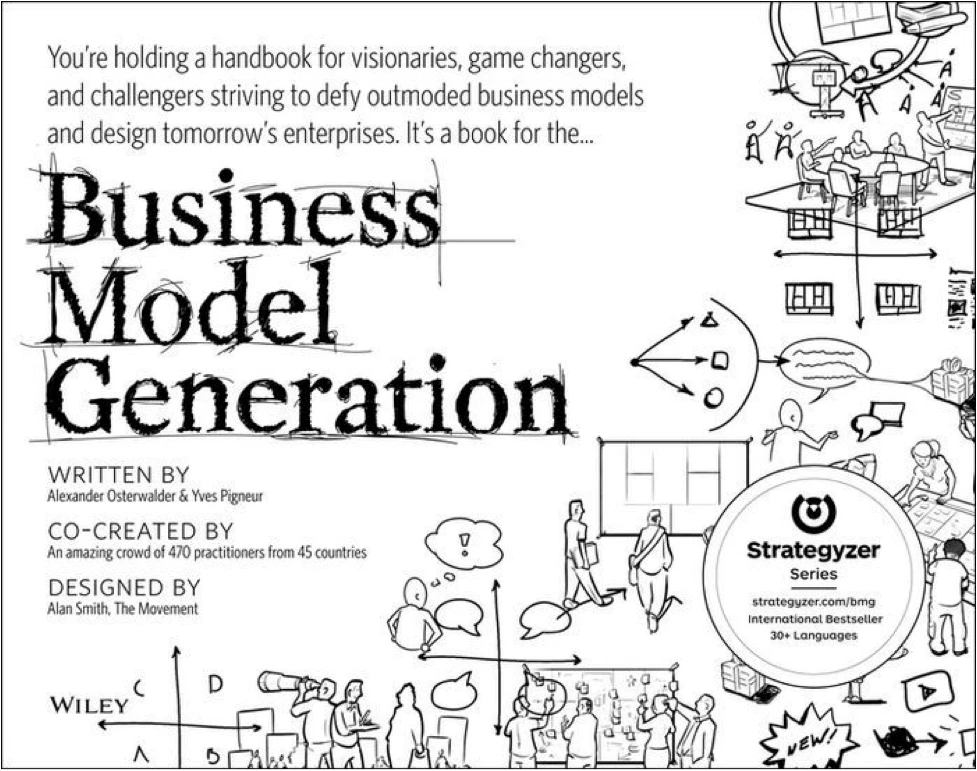
Business Model Generation – Handbook
Business Model Canvas Components
- What is the Business Model Canvas?
- Key Component of the Business Model Canvas
- Business Model Canvas – Downloads
- Additional Resources
In just under a decade, the book has revolutionized, for many, the way that we plan, forecast and roll out new businesses. The book clearly defined what a business model is:
“the rationale of how an organization creates, delivers and captures value.”
And they created a strategic, visual tool known as the business model canvas. Why?
I won’t lie, innovation and entrepreneurship is really hard. Anybody who tells you something else hasn’t done it.
Yet, it’s hard like any interesting profession is hard. You need to learn the skills and then practice, practice, practice. Same as becoming a doctor or architect.
— Alex Osterwalder🇨🇭 (@AlexOsterwalder) April 29, 2019
Innovators, entrepreneurs, executives and dreamers alike needed a tool to visually map out, share, dissect, rework, and ultimately refine their ideas and innovations into a structured format.
What is the Business Model Canvas?
There are 9 Building Blocks in the Business Model Canvas.

Key Component of the Business Model Canvas
Value Proposition:

What unique value does a company’s product or service create for customers?
Customer Segments:

What group(s) of customers is a company targeting with its product or service?
Customer Relationships:

How does a company plan to build and maintain relationships with the customers it is serving?
Customer Channels:

What channels does a company use to acquire, retain and continuously develop its customers?
Revenue Streams:

How is a company pulling all of the above elements together to create a revenue stream(s) and generate cashflow?
The above 5 Building Blocks represent the right side of the canvas, and contribute to the Revenue side of the business model.

Key Resources:

What assets and knowledge does a company possess that allow it to deliver its value to customers in ways that other companies can’t?
Key Activities:

What activities does a company engage in that allow it to execute its strategy and either establish a presence in the market or gain market share?
Key Partnerships:

What strategic and cooperative partnerships does a company form to increase the scalability and efficiency of the business?
Cost Structure:

What are the key costs associated with running the business and how can key partnerships/resources be leveraged to reduce the cost structure?
The remaining 4 Building Blocks come together to form the left side of the canvas, and contribute to the Cost Structure of the business model.

Business Model Canvas – Downloads
Business Model Canvas – PDF Download
Business Model Canvas – PPT Download
Business Model Canvas – KEY(note) Download